Conservation work and Public Archaeology
Conservation
Apart from conducting an archaeological dig, the current project will pay special attention to protecting cultural heritage of Khirbat as-Sar. The state of preservation of exposed architectural remains and any surface finishes (e.g., wall plasters and mosaics, if found) will be assessed, and the immediate environmental threats to the uncovered architectural features will be identified. This activity will serve as the basis for final conservation expertise with a proposal for a long-term preservation program that will be presented to the DoA.
State of preservation and threat assessment of the site
The purpose of the conservator investigation in 2023, conducted by Dr. Julia Burdajewicz (Faculty of Conservation and Restoration of Works of Art, Academy of Fine Arts in Warsaw), was to prepare a report assessing the state of preservation of the Khirbat as-Sar archaeological site and identify the principal types and causes of natural and anthropogenic threats responsible for its condition. The report presented to the DoA included the recommendations for maintaining and preserving the site by managing the present and potential deterioration factors.
In the 2024 season, the conservator's activity focused on assessing the current state of preservation of the Khirbat as-Sar site in light of the principal types of deterioration phenomena, with a special emphasis on changes or damages that occurred since the 2023 season.
Conservation of floor mosaics
Trench T2-S
In 2023, a patch of floor mosaic was found in trench T2-S. It was treated and reburied ( and ). In the following season, the trench was slightly expanded, and the eastern and western edge of the mosaic was unearthed (). The reburial technique employed in the 2023 season turned out to be very efficient. The previously discovered and treated part of the mosaic remained in good condition and was relatively clean. It was thoroughly inspected once the secondary soil was removed entirely. All mortar bands applied in 2023 remained stable and coherent. No new losses or disintegrated edges were noted within the previously treated area. Conservation treatments were carried out in order to stabilize the condition of the newly discovered parts of the mosaic. At the end of the 2024 season, the mosaic was covered with the same synthetic sturdy mat as the previous year and reburied with a thick layer of soil (80-90 cm) ().
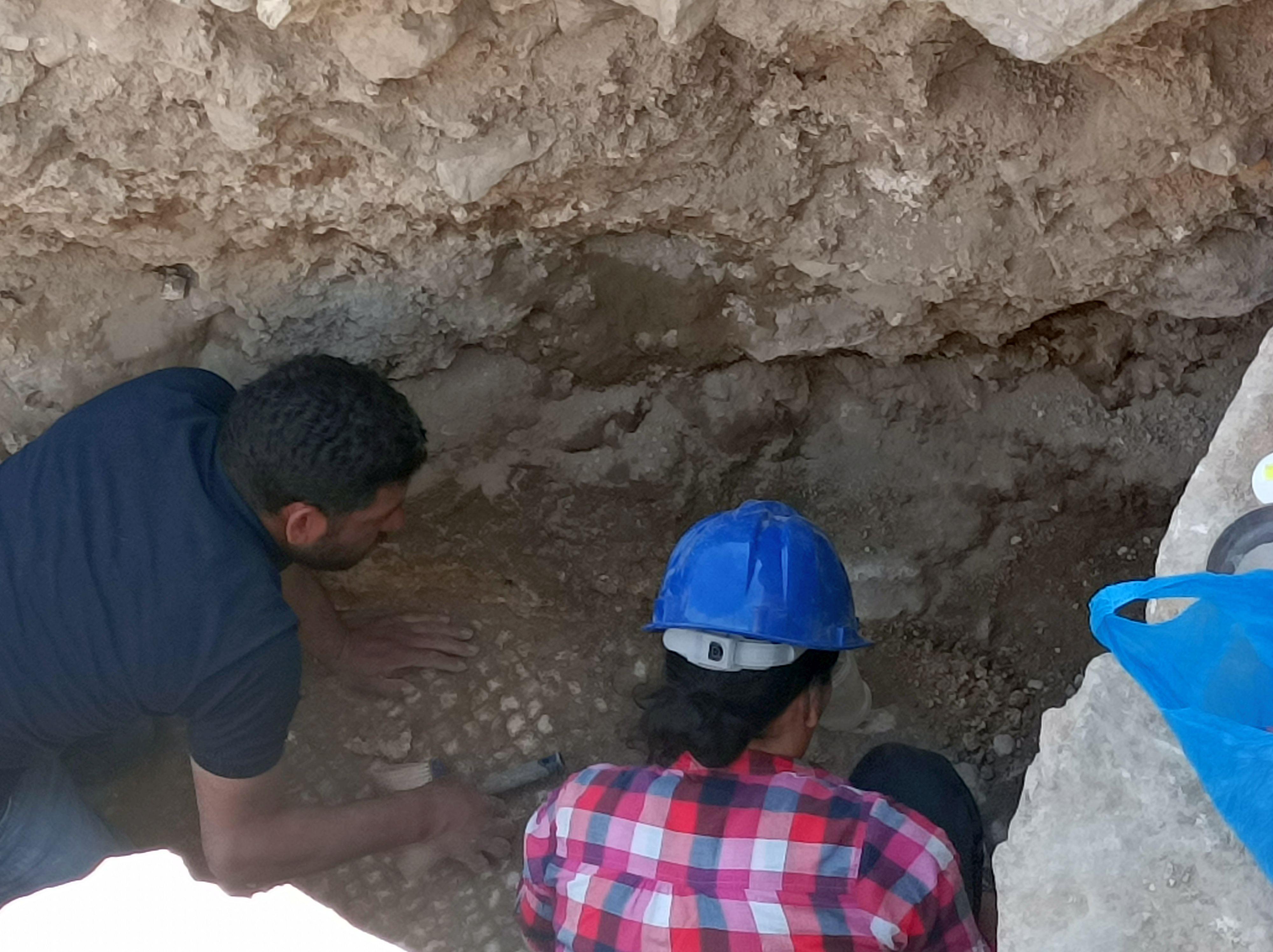
by Mariusz Burdajewicz).

mortar bands and cleaning, before reburial, 2023 (image by Julia
Burdajewicz).

its discovery, 2024 (image by Julia Burdajewicz).

of mortar bands and cleaning, before
reburial, 2024 (image by Julia
Burdajewicz).
Trench T5
At the very end of 2024, in Trench T5, below the mass of collapsed masonry, a small fragment of a plain white mosaic floor has been uncovered (), identical in appearance to that discovered in Trench 2-S. The mosaic abuts the foundation wall of the Roman-period vestibule, with patches of wall plaster still attached to its lower part. The mosaic was preserved in very good condition, and after cleaning and preliminary stabilization treatments, it was properly covered until the next season. In 2025, the mosaic was uncovered over a much larger area of the room, which turned out to be part of an olive press. The mosaic was again cleaned and stabilized by the conservator ( and ), and then covered for protection. The edges of the wall plaster were secured with mortar bands.
At the end of the 2025 season, all the deepest parts of this trench, as well as the North-eastern area, were backfilled and provided with Arabic signs () to prevent members of the local community from potential danger.
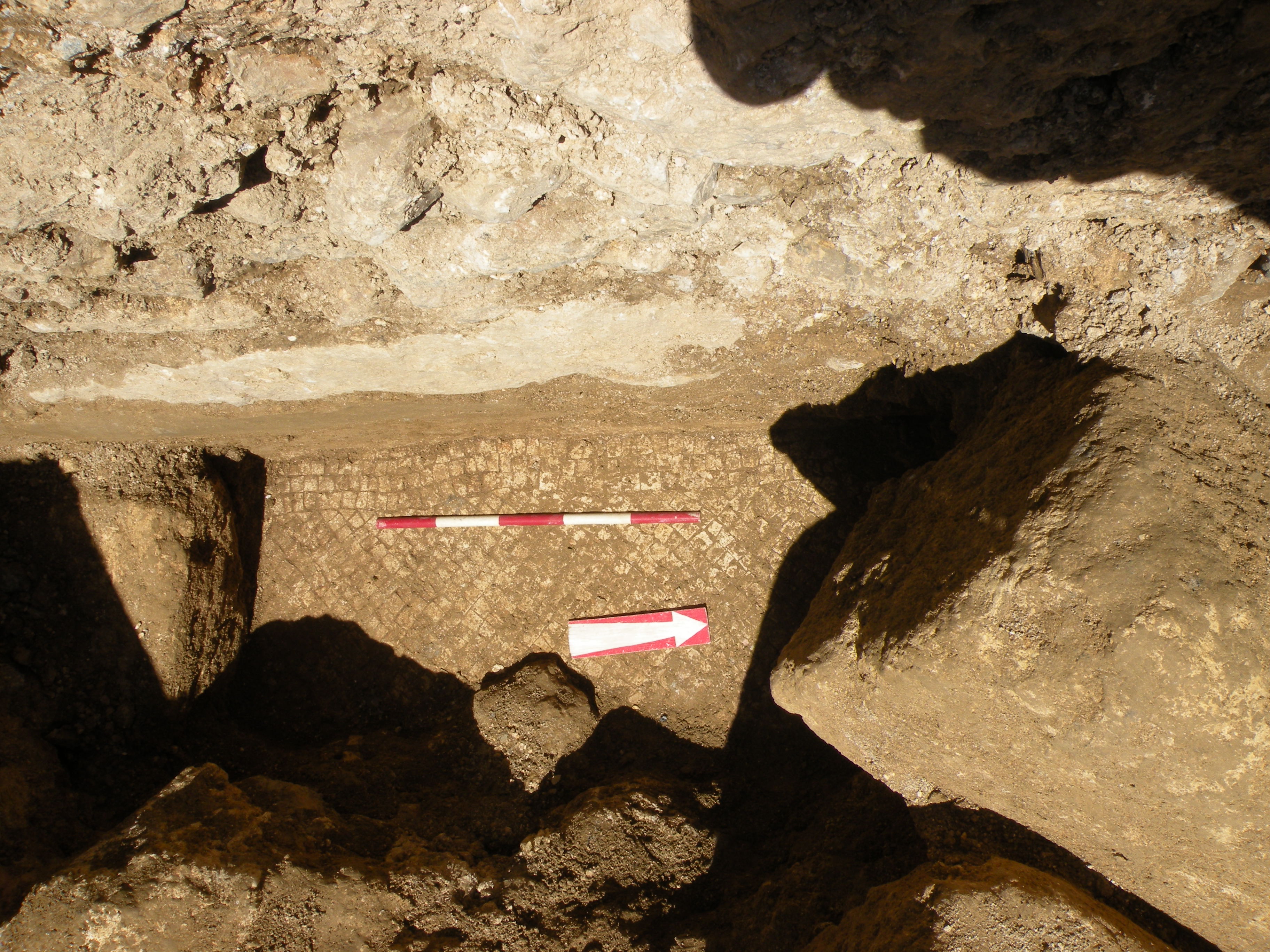
(image by Mariusz Burdajewicz).
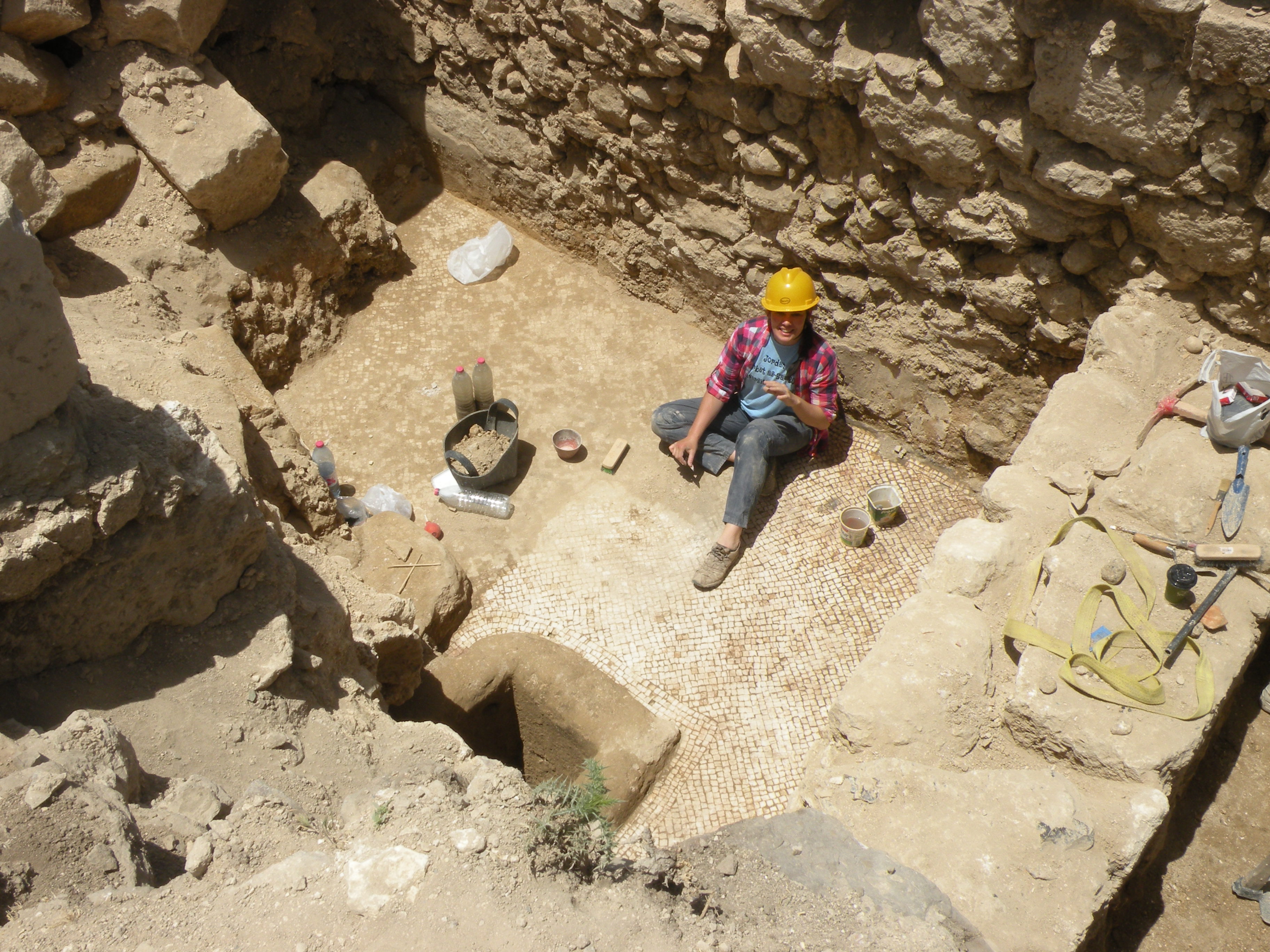
(image by Mariusz Burdajewicz).
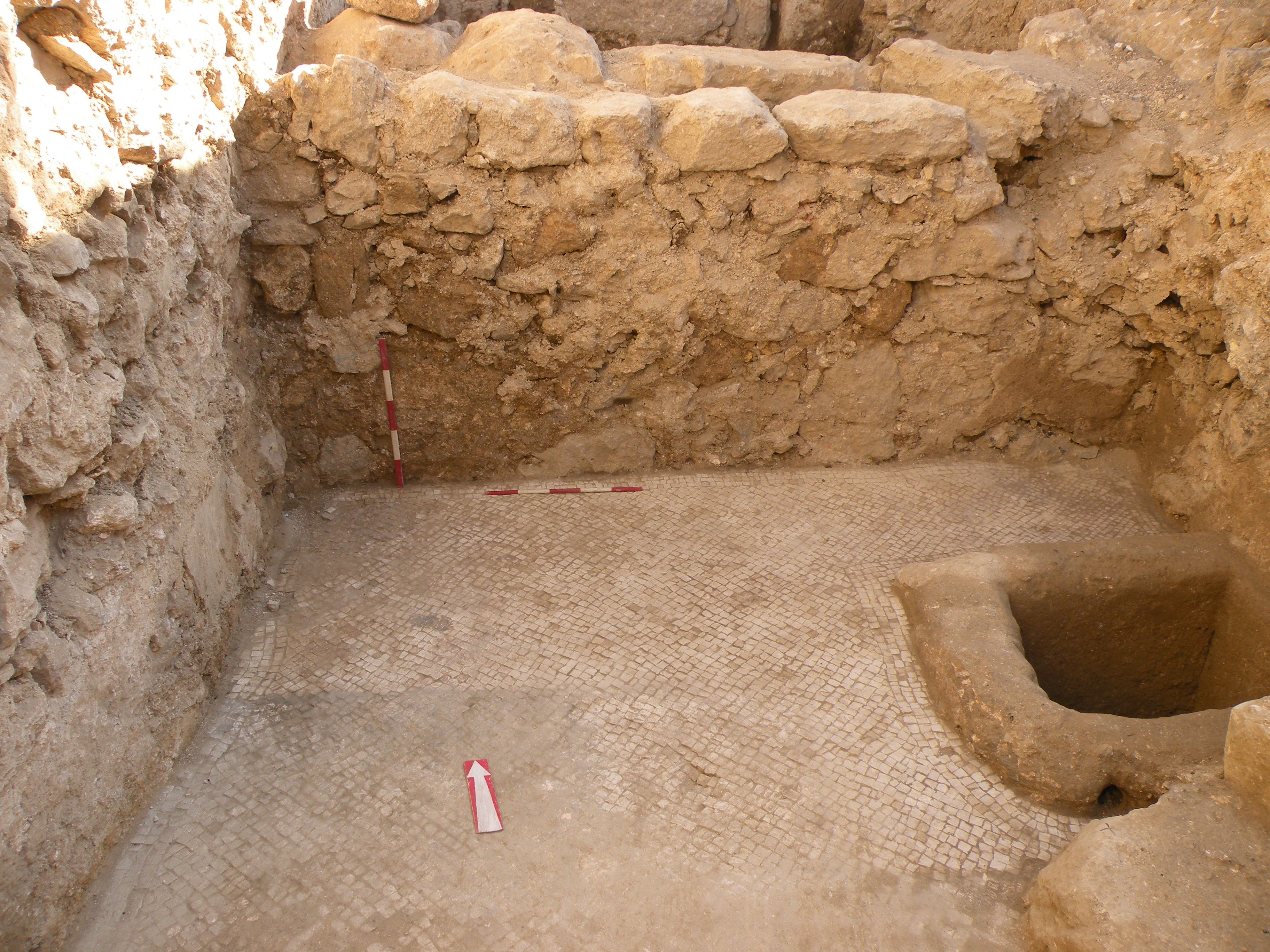
2025 (image by Mariusz Burdajewicz).

Public Archaeology
The community outreach program implemented during the project will enhance understanding the local population's attitudes towards their heritage. It may be possible to collect potential information on unrecorded (clandestine) archaeological findings in the vicinity of the site, as well as on the oral traditions and legends connected with the site. Another benefit of such an approach is the cooperation and relationship-building with the local community achieved through public archaeology. The engagement of the local community may enhance the protection and preservation of the discovered cultural heritage of the area.
The first step in the 2023 season was to conduct social research (by Dr. Katarzyna Radziwiłko). Interviews were conducted with people of both genders (). Among the respondents were excavation workers, shepherds, field owners, vendors/owners of nearby stores, and students. Interviews were conducted in Arabic and simultaneously translated into English with the DoA Representative, Mrs. Hana Lafi, acting as interpreter. The main objective of the interviews was to obtain answers to topics related to the historical and cultural heritage and its protection, as well as to prospective development of the site for tourist purposes. The conducted research was the first step to creating an action plan involving the local community to protect their historical heritage.
In addition, thanks to the assistance of Mrs. Hanadi Al-Taher of the SCHEP, the first "open day" was held at the excavation site, to which the local community was invited. During this event, the visitors were familiarized with the history of the site and the methodology of excavations ().
In the 2024 season, another "open day" was organized on-site with the support of Mrs. Hanadi Al-Taher. We hosted members of the local community and explained to them the history and importance of the site of Khirbat as-Sar.
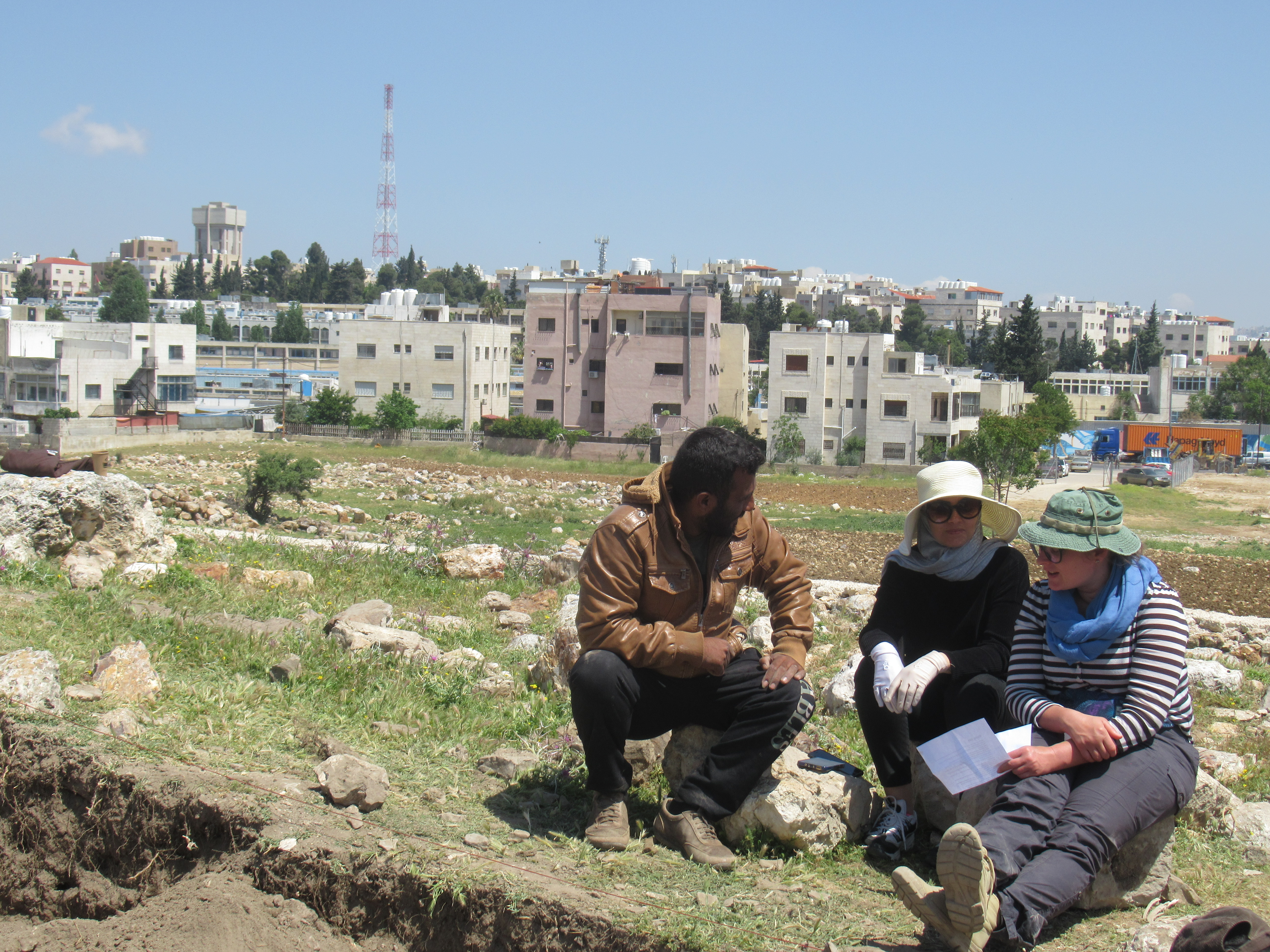
Jolanta Młynarczyk).
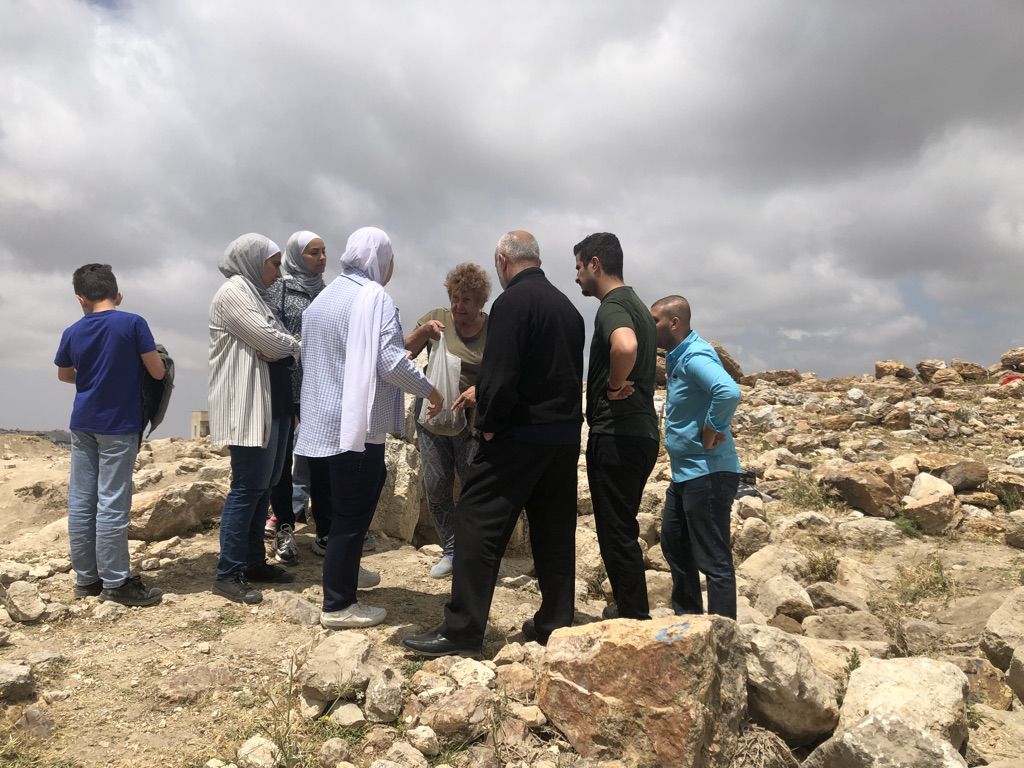
guests to ceramic finds (image by Katarzyna Radziwiłko).