Current Project
The investigation of the Polish archaeological mission in Khirbat as-Sar in 2018 and 2019, conducted on behalf of the PCMA, ended due to the Coronavirus-19 pandemic. A new research project enabling the resumption of field research did not begin until 2022, this time on behalf of the Faculty of Archaeology, University of Warsaw, and with funding from the National Science Centre (UMO 2021/43/B/HS3/00813). So far, three seasons of excavations have taken place.


Season 2025
The third excavation season at Khirbet as-Sar was conducted between 27 April and 25 May 2025 (Permit no. 16/2025). The fieldwork focused on two areas, which constituted the enlargement of the trenches excavated in previous years. One of them was situated in the eastern part of what was traditionally considered a Roman sanctuary compound, and another one in its westernmost part. A test trench was also opened at the southern foot of the Sarah mound ().
In the eastern part of the Roman compound, we connected trenches 1/1 and 1/3 of 2023 with trench 1/3-W of 2024 by expanding the hitherto excavated area to the south-west and slightly to the west ().

Anna Kubicka-Sowińska).
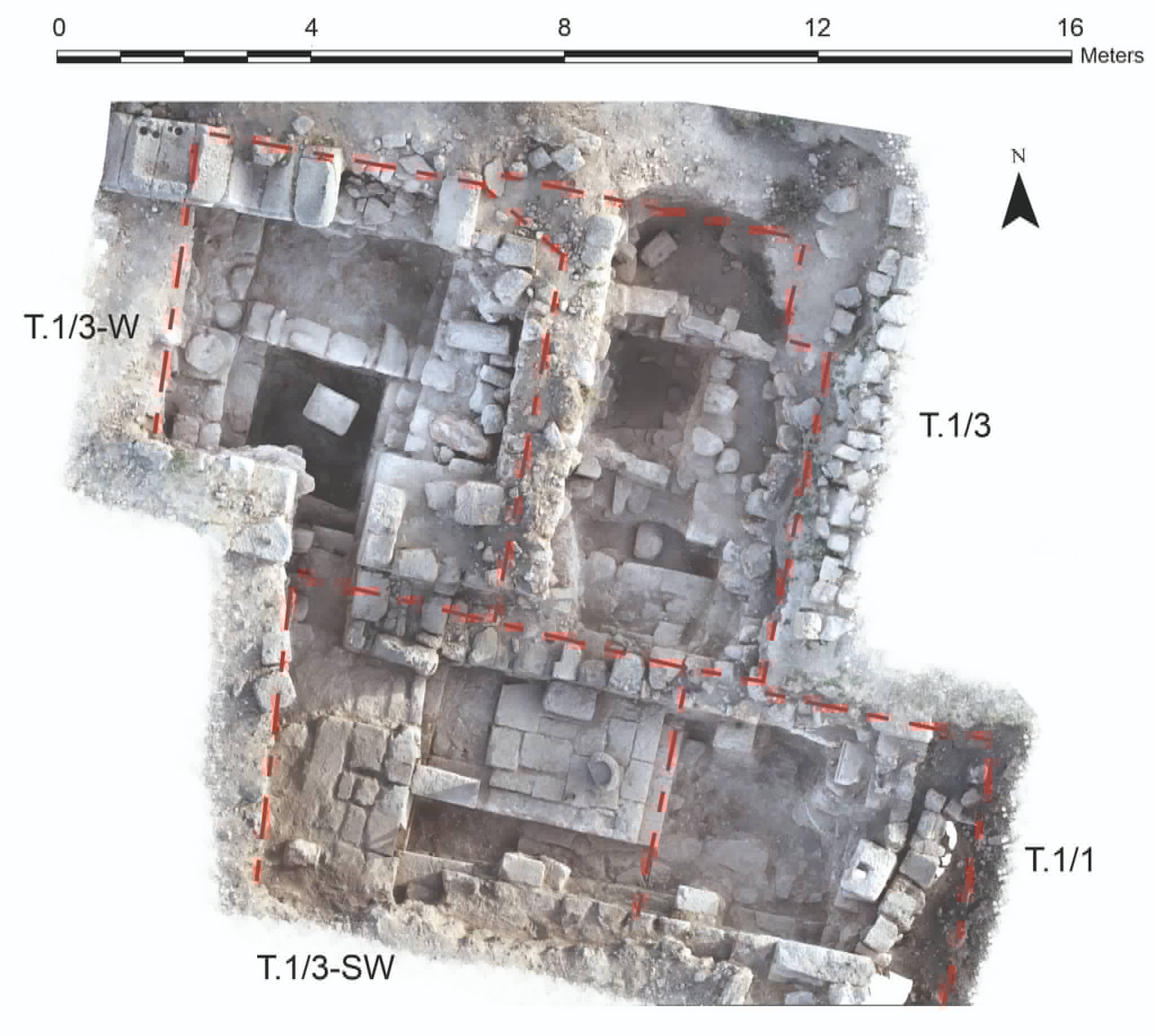
of the season with the subdivision into individual
trenches (B. Ćmielewski and A. Kubicka-Sowińska).
The exploration brought more evidence of a dense occupation of this area during the Middle Islamic (Ayyubid and Mamluk) period, the phases of which matched those recorded in 2023 and 2024. Even more prominent were the remains of the early Islamic period (Umayyad to Abbasid). Interestingly, for the first time, a Fatimid-period phase was also recorded by the presence of relevant pottery. As for the pre-Islamic periods, their detailed chronology was complicated by the fact that early Islamic architectural remains appeared to sit directly on top of those from the Byzantine and Roman periods. Thus, to the Roman period (2nd century AD?) has been attributed an entrance leading to the arcaded courtyard from the east, and flanked by two strong square piers, the northern of which was uncovered in 2024 (). This entrance was preceded on the east by a paved platform, possibly added in the Byzantine period (). Subsequently, in the Umayyad period this area was transformed into a room supported by two pairs of pillars built upon the level of the pavement in question; a beautiful and homogeneous set of Umayyad-period pottery was found in the SW part of trench 1/3-SW ().
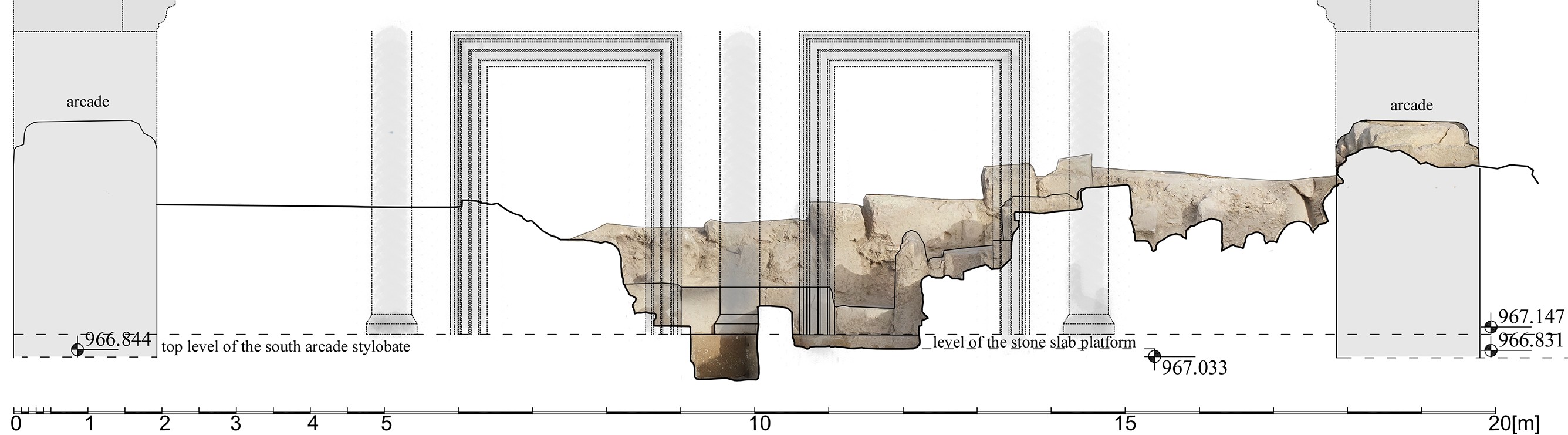

view from the southeast (image by Bartek Ćmielewski).
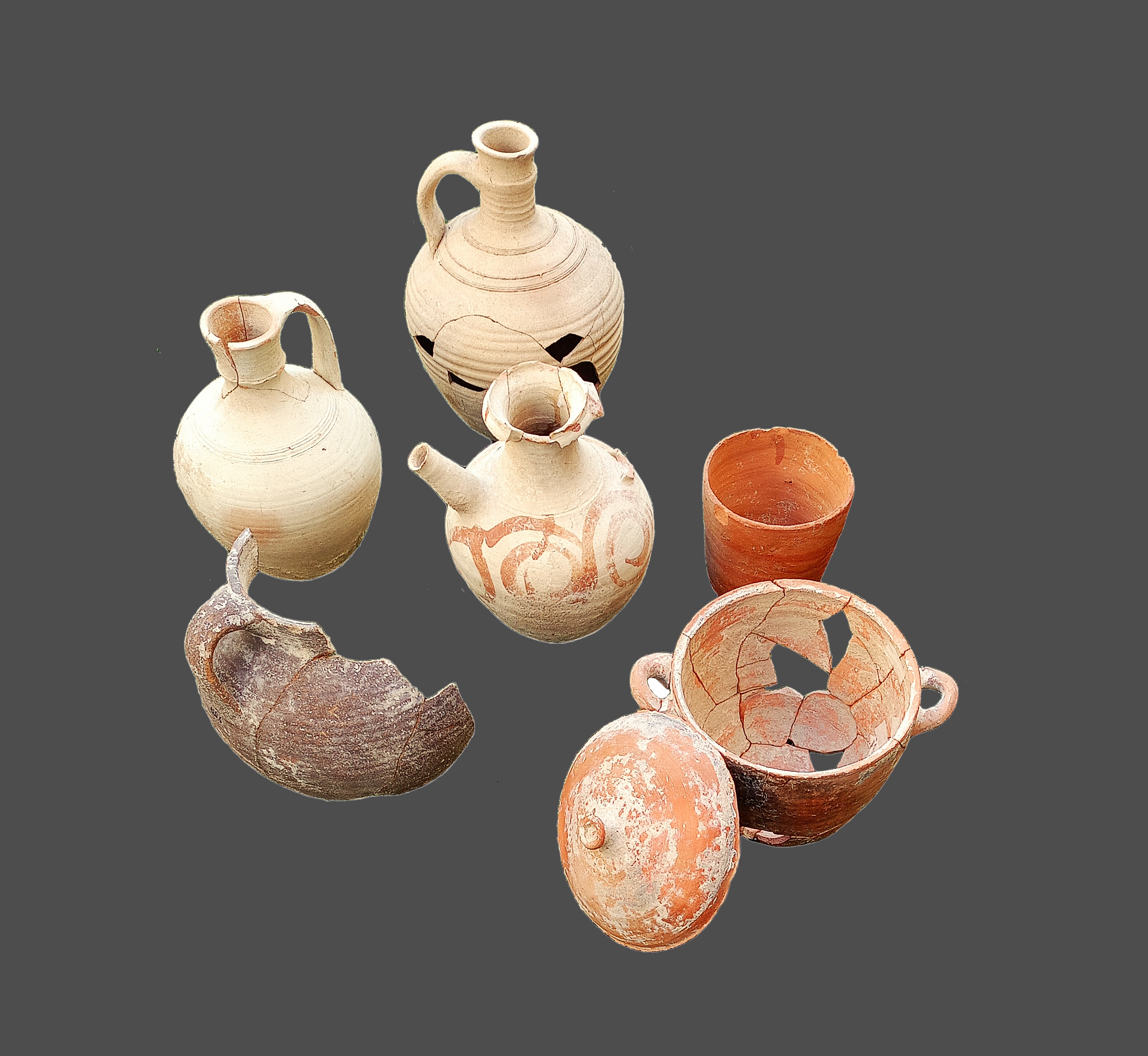
(image by Mariusz Burdajewicz).
In the western extension of trench 1/3-W of 2024, a multi-phase N-S wall was found; its uppermost section, probably associated with the Ayyubid period, was built on the early Islamic (Abbasid?) one, which in turn was using a Roman wall (). On the Roman wall, a column base together with its pedestal was still standing (). Under the earthen walking level associated with this wall, there was an exceptionally thick levelling layer (already noted in 2024) whose bottom could not have been reached (). This levelling later contained not only the Doric capital (not later than the 1st century BCE, if not earlier) (), but also potsherds ranging in date from the Iron Age(!) till the end of the 1st century CE.
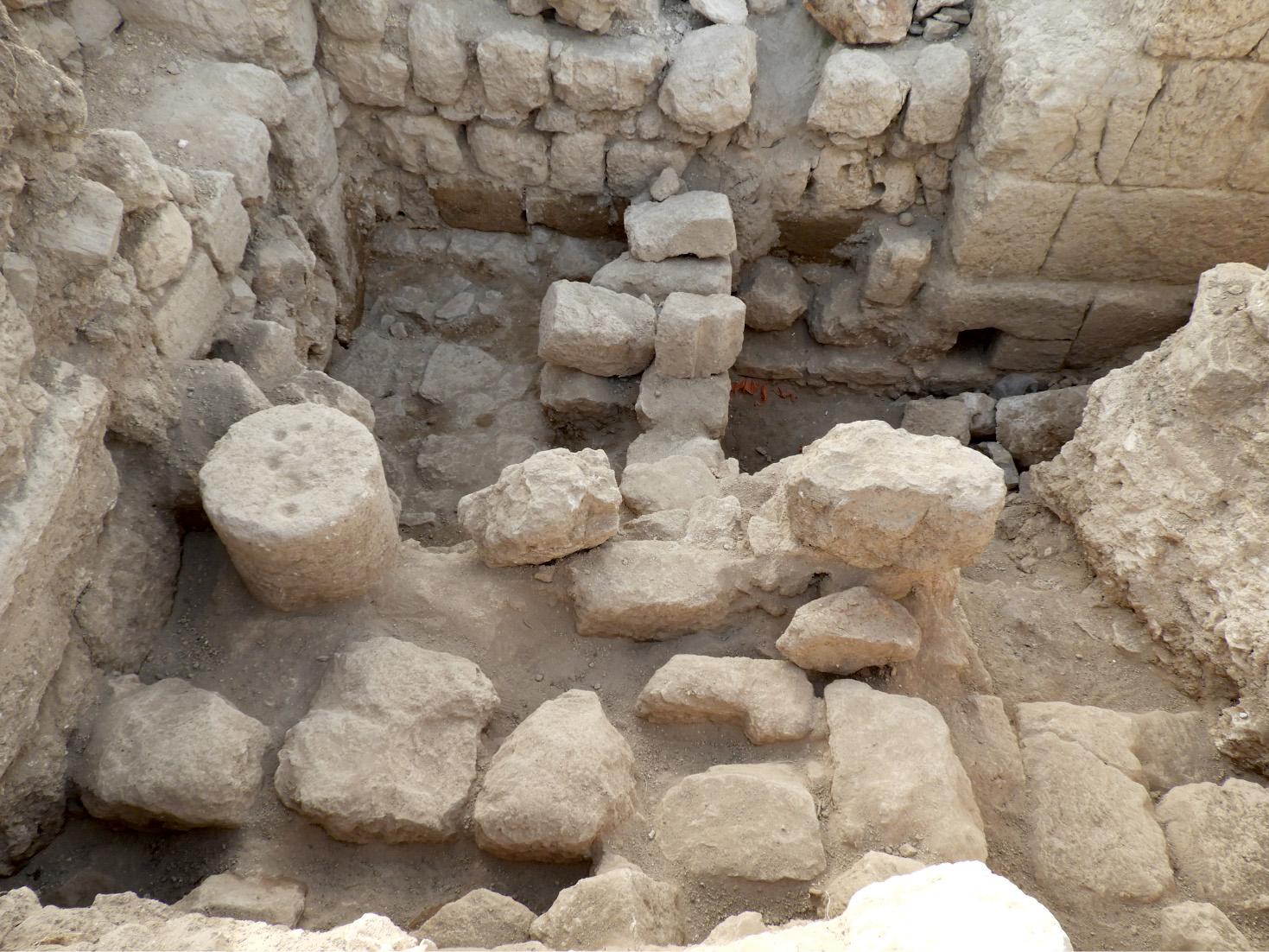
Borowski).
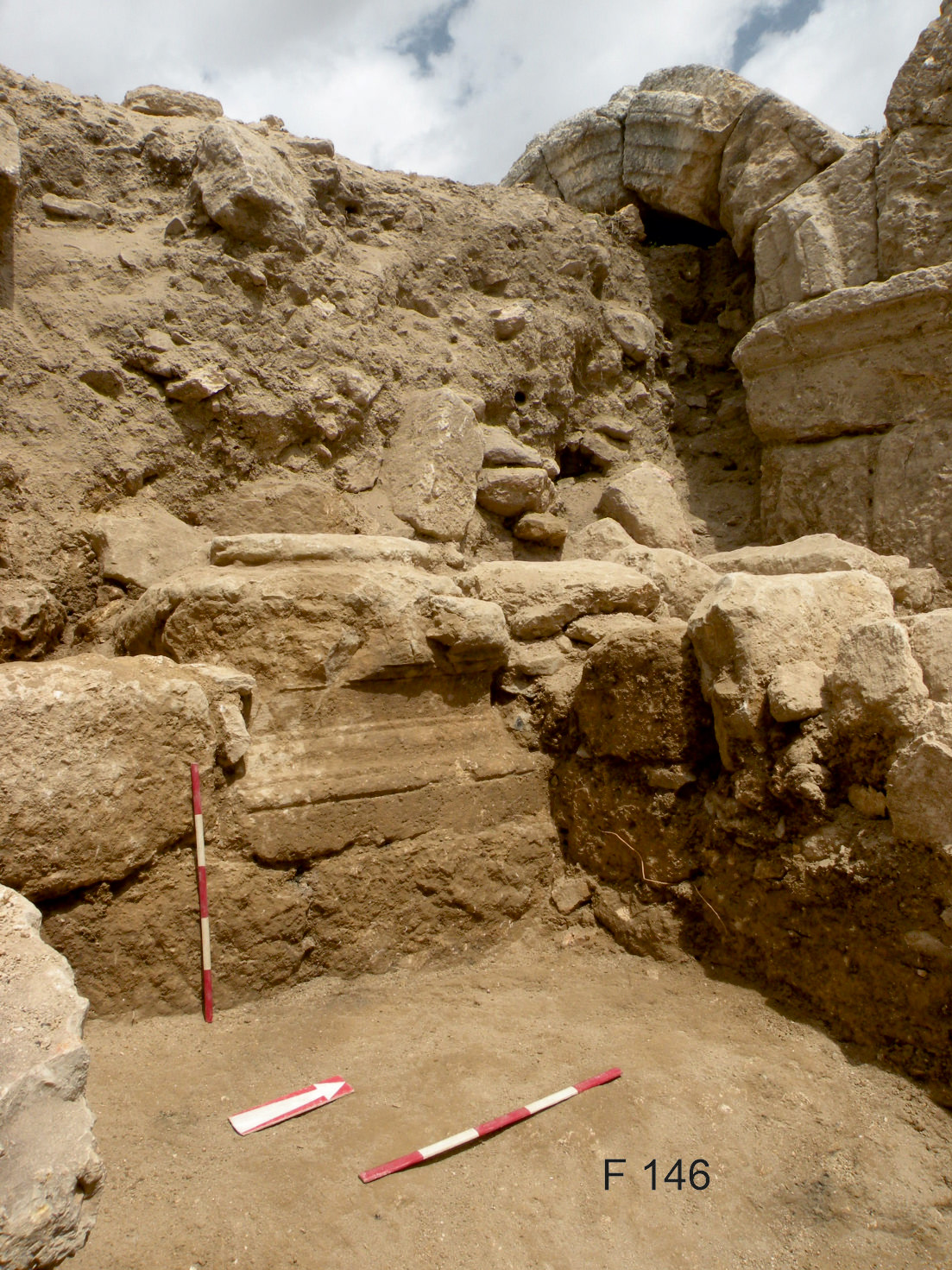
together with its socle from a
limestone block (image by
Mariusz Burdajewicz).
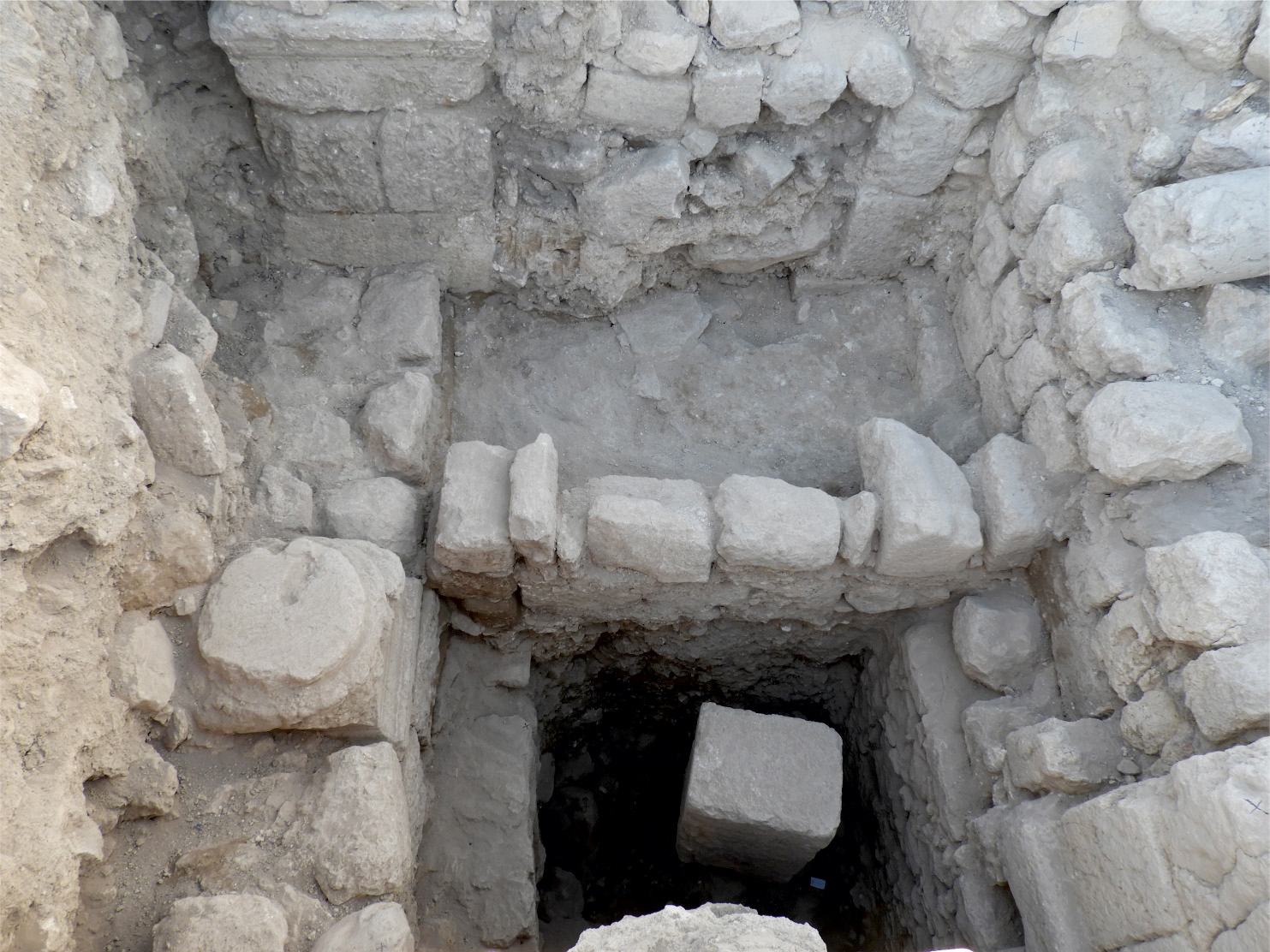
Borowski).
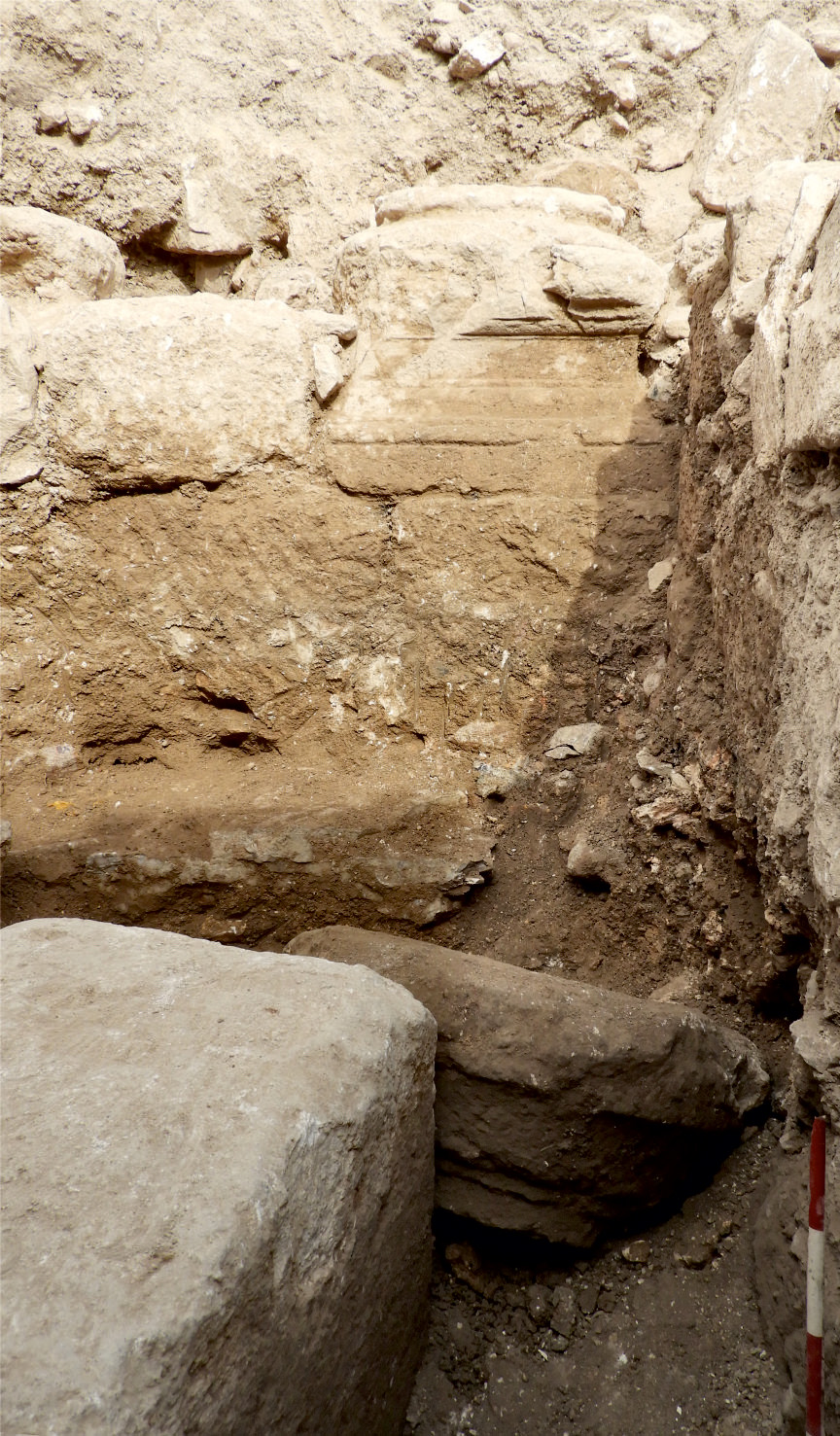
top of the levelling layer
B465 right below the
foundation offset of W33,
viewed from the east
(image by Tomasz
Borowski).
Trench 5, opened in 2024 in front of the eastern side of the “Ammonite tower”, has been extended to the north (). Its exploration yielded a series of Ayyubid/Mamluk-period levels preceding an early Abbasid-period floor (8th century), the latter associated with iron smelting activity, to judge by the first discovery of a metallurgical furnace in the season of 2024. Remains of another furnace were also found during this season, specifically on the northern side of an E-W wall, indicating that the workshop may have been utilising two separate rooms or compartments ().
(image by Anna Kubicka-Sowińska).
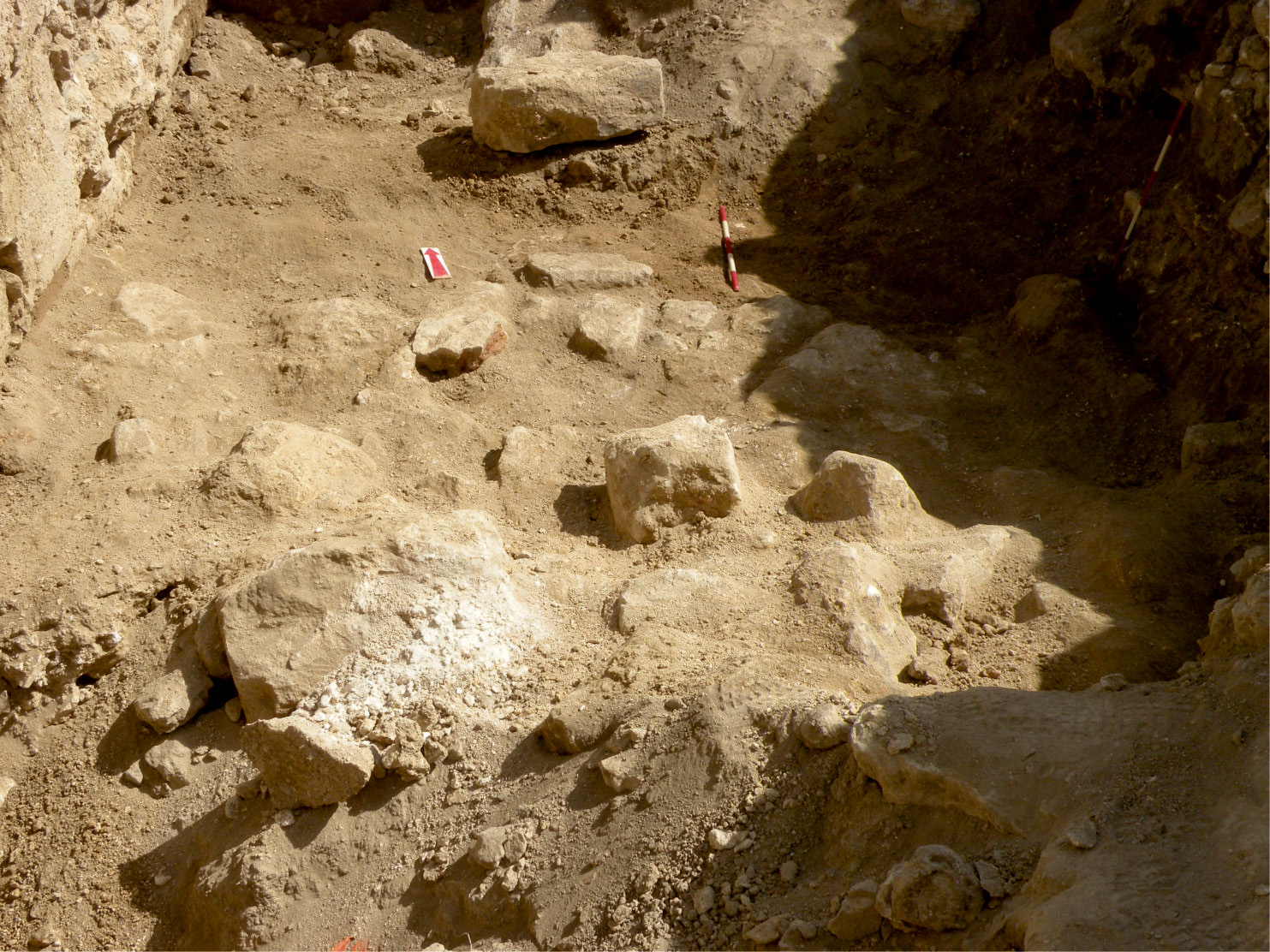
F311; view from the south (image by Jolanta Młynarczyk).
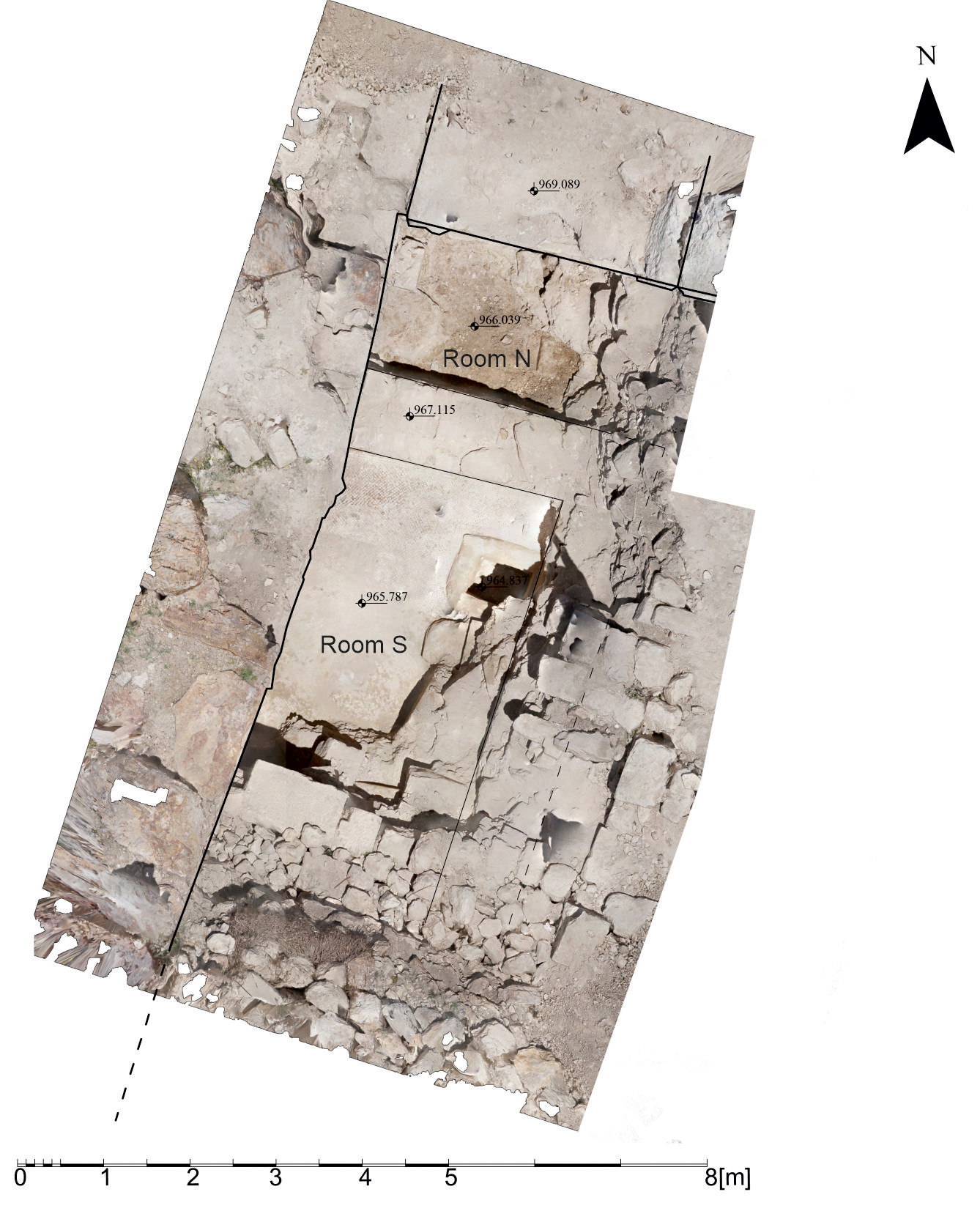
On the southern side of the above-mentioned E-W wall, the construction of which most probably goes back to Byzantine period, a monochrome mosaic floor, first noticed in the previous season, has been reached; it was in a perfect state of preservation, and needed just cleaning which was done by a professional conservator (). The E-W extent of the room, as well as its northern border, have been determined, while its southern end remains uncovered. The room was constructed using many spolia (architectural elements of monumental size) from a Roman building, probably the temple. Contrary to our initial belief, it was not a part of a regular habitation; instead, it housed an olive oil press, with a collection vat constructed in the mosaic floor () and three openings for wooden lever beams in the western wall (). Remains of several ceramic pithoi were found alongside potsherds of well-datable vessels (). The presence of the latter leaves little doubt that the evidence of violent destruction of the building (with dense debris and traces of fire on the mosaic floor) relates to the same earthquake of 749 CE which destroyed an Umayyad period building in Trench 2-S (2023-2024).
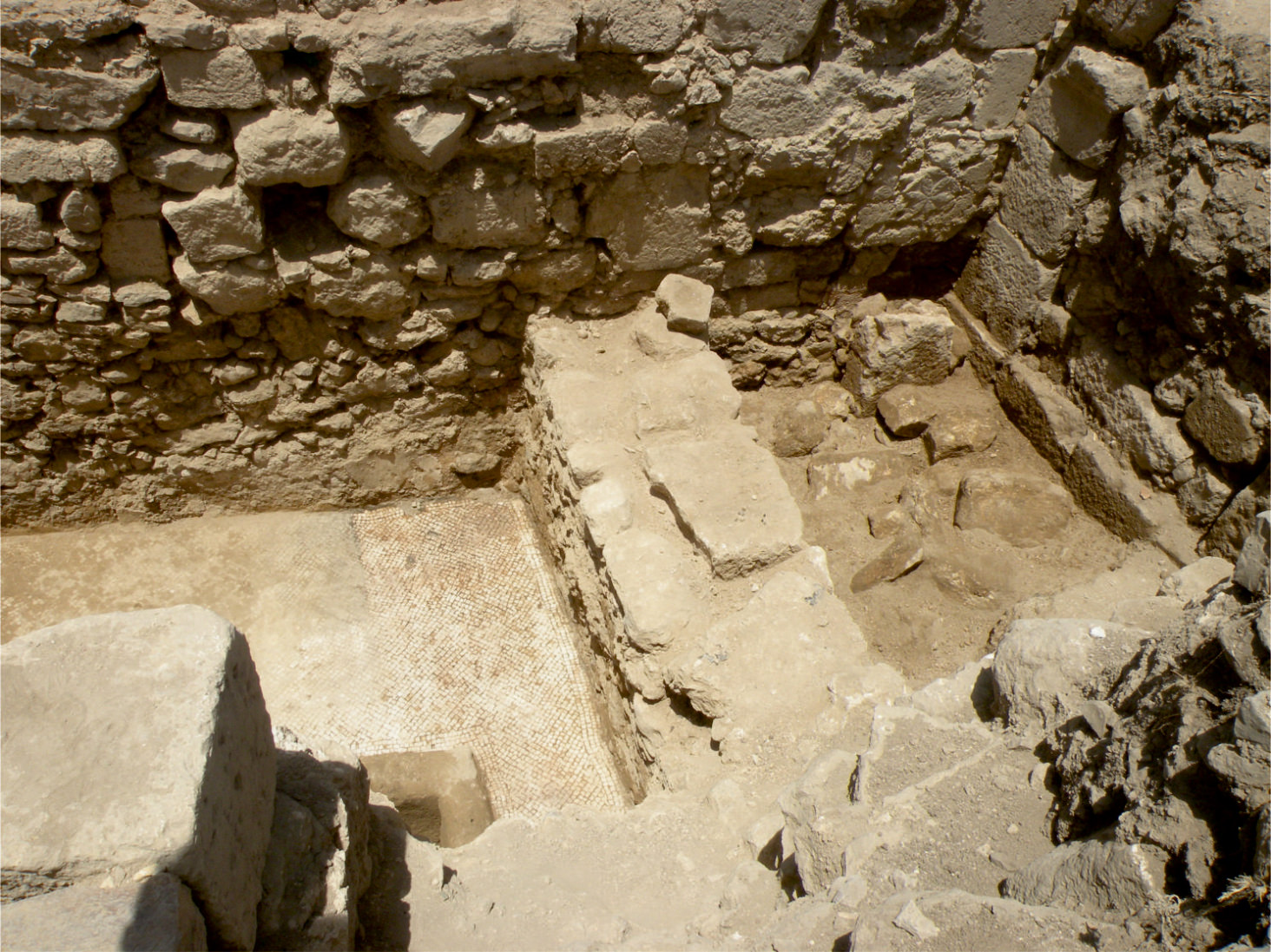
(image by Mariusz Burdajewicz).
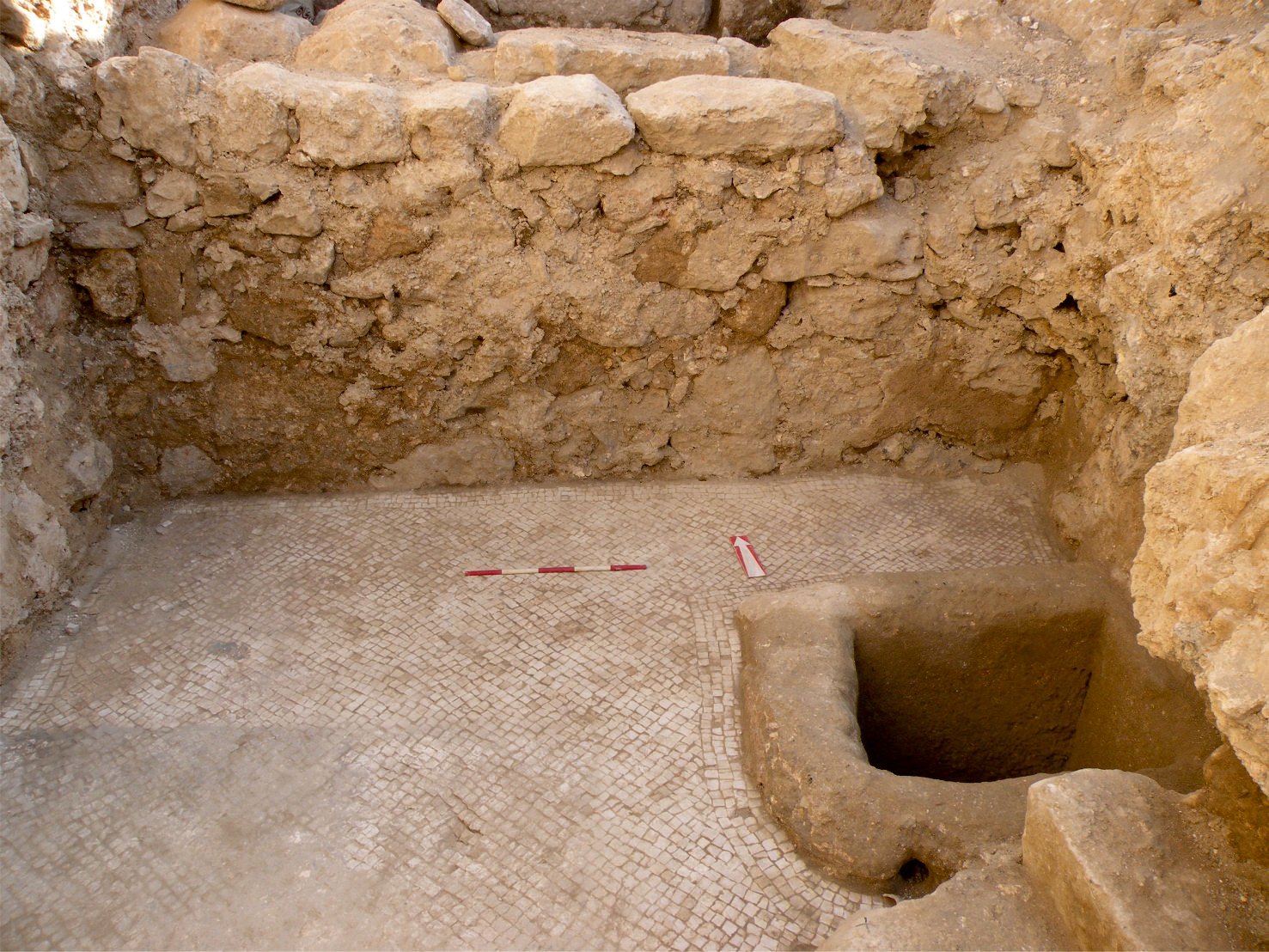
view from the south (image by Mariusz Burdajewicz).
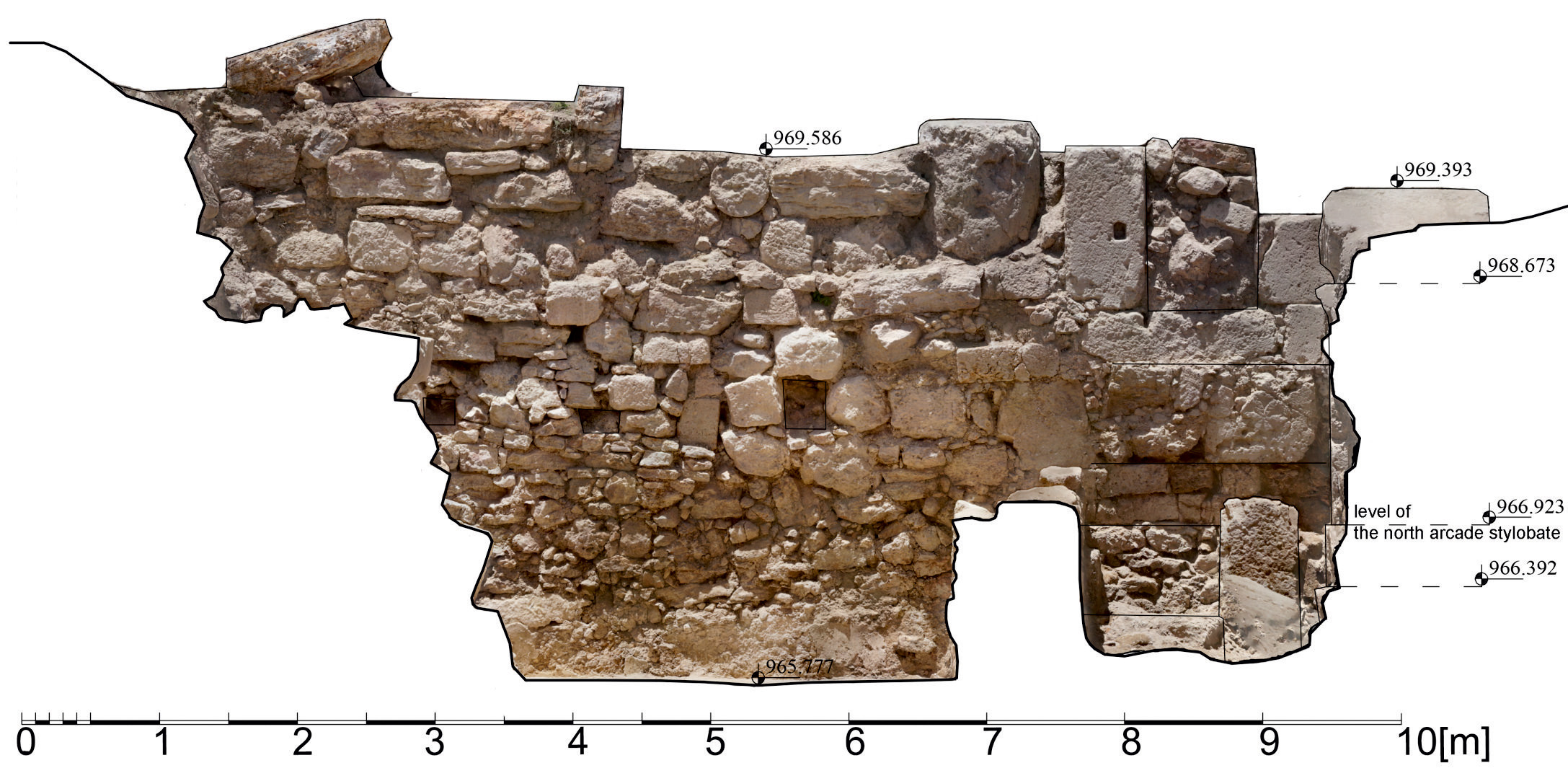
Kubicka-Sowińska).
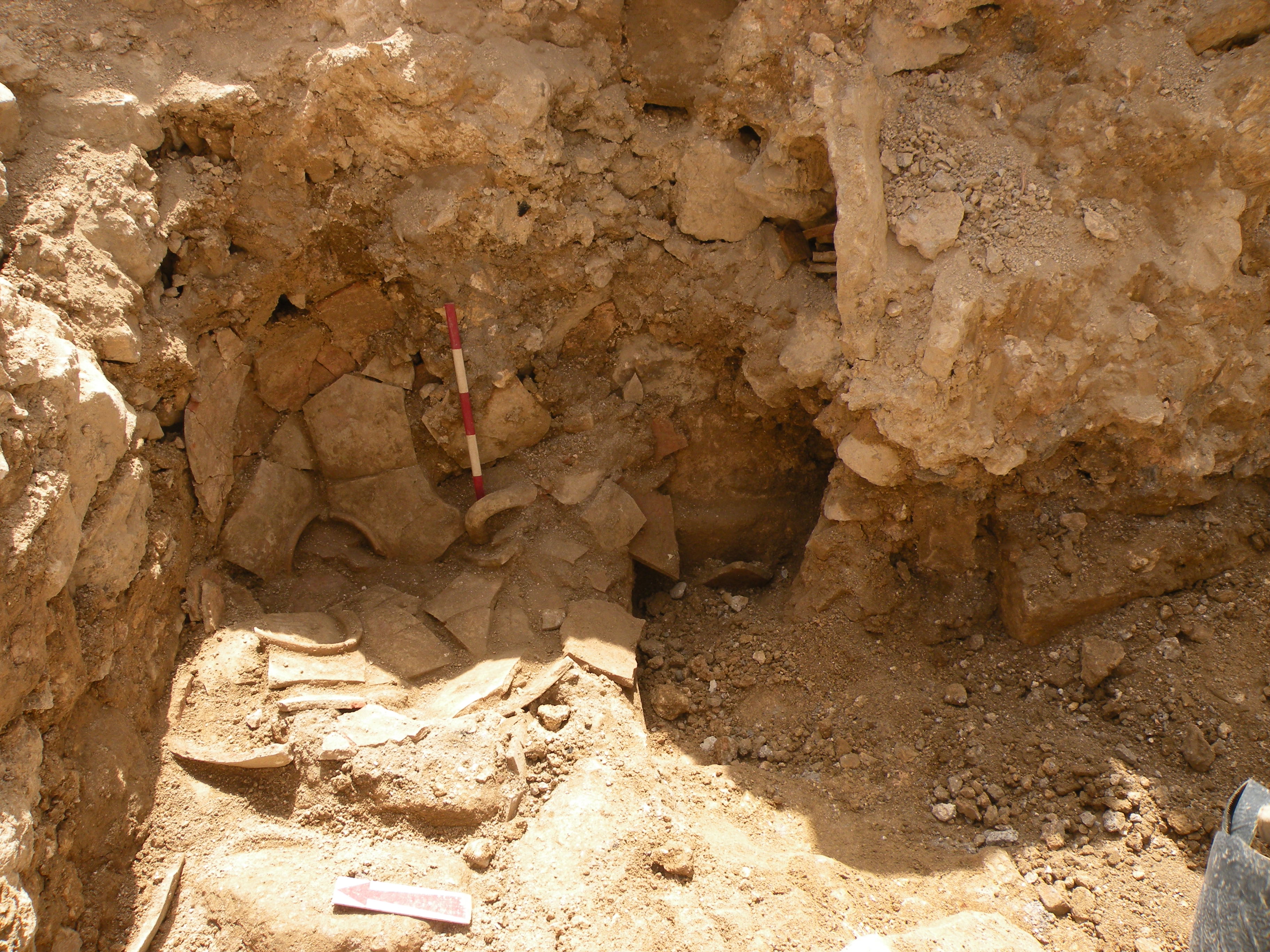
Southern Room, view from the west (image by Mariusz
Burdajewicz).
On the north side of the northern room of the olive press, and below the layer associated with the Umayyad-Ayyubid iron smelting workshop, a Byzantine (6th-century) level was found. Except for masses of well-dated pottery found both in a thick levelling layer and an occupational layer, it yielded evidence for the production of glass vessels during that period.
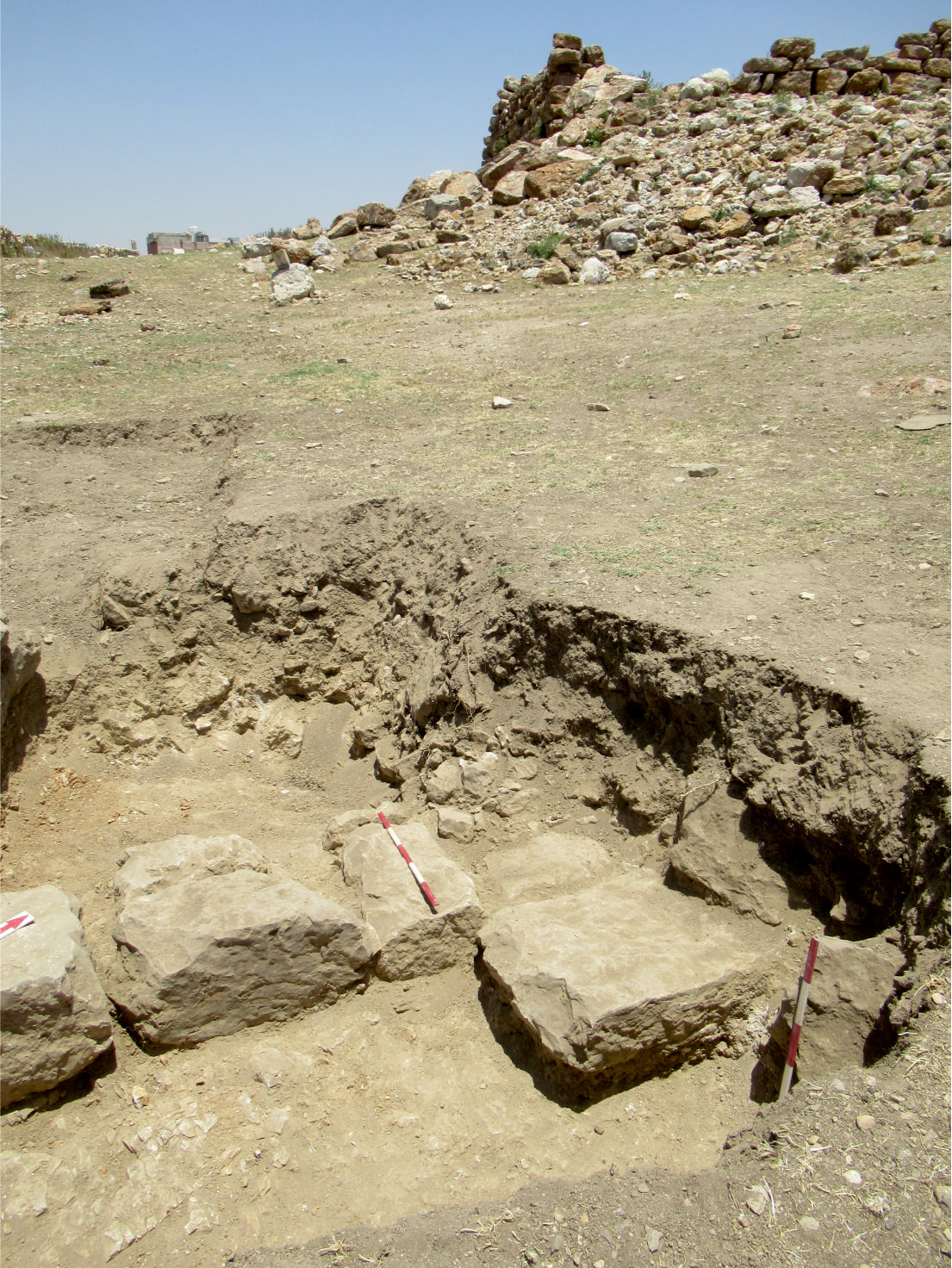
Finally, Trench 6 was opened on the low ground part of the site, to the south of the “Ammonite tower” (). Due to the lack of time, only the upper levels of that trench could have been explored. Unlike at the top of the mound, no Islamic-period layers were found there; the only floor associated with an apparently shallow N-S wall yielded a small amount of Byzantine pottery.
In addition to the field activities, the study of Middle Islamic pottery was pursued by Dr. P. Makowski, while the zooarchaeologist Dr. A. Grezak studied the faunal remains discovered in 2023-2025. Dr. A. Kubicka-Sowinska recorded and catalogued all fragments of architectural decoration found throughout the site, and Dr. J. Burdajewicz cleaned and secured small objects inventoried during this season.